
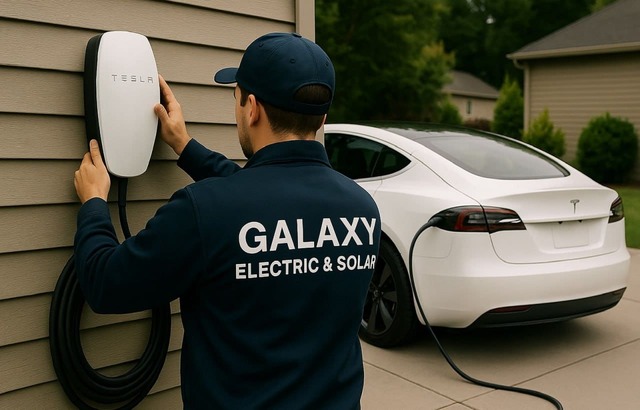
The short version: as of November 2026, the big incentives that used to take the edge off a home EV charger installation in Seattle have mostly ended. Here is what we can confirm, what we cannot, and where the real savings are now.
What has ended
- The federal home charger tax credit (Section 30C). It covered 30 percent of the cost, up to $1,000, for a charger at your home. The U.S. Department of Energy's Alternative Fuels Data Center lists it as expired on June 30, 2026. A charger put in service after that date does not qualify.
- Washington's sales and use tax exemption for charging infrastructure. It covered the equipment and the installation labor. The Washington Department of Revenue lists it as expired July 1, 2025. We found no sign that it has been renewed, but check with the Department of Revenue or a tax professional before you rely on either answer.
- Seattle City Light's instant discount on home chargers. City Light's home energy rebate page does not list a Level 2 charger discount today. Rebate programs change often, so ask City Light directly before you buy.
If you installed a charger before June 30, 2026, you may still be able to claim the federal credit on your 2026 return. That is a question for your tax preparer, not for us.
Where the real savings are now
With the rebates gone, the biggest swings in what a charger costs come from the electrical side, and that is where an honest assessment pays for itself.
1. Do you actually need a panel upgrade?
A lot of Seattle homes have a 100-amp service. Add a 48-amp charger to a home that already runs electric heat or a heat pump, and on paper it can exceed that limit. But paper is the key word. A proper load calculation often shows there is room, and when there is not, a load management device can let the charger share capacity with the rest of the house instead of forcing a full service upgrade. We run the calculation before we recommend anything, because a panel upgrade is the single most expensive thing on most charger jobs.
2. Where the charger goes
Distance from the panel drives wire, conduit and labor. A charger on the garage wall next to the panel is a very different job from one on the far side of a detached garage or a carport across the yard. If you can choose, choose close.
3. Plug-in or hardwired
A NEMA 14-50 outlet is cheaper to install and works with many chargers, including the mobile connector that ships with some cars. A hardwired unit can deliver more power and is more reliable outdoors. Neither is wrong. The right pick depends on how many miles you drive and how long the car sits.
4. Permit and inspection
An electrical permit is normally required. In Seattle the city handles electrical permits and inspections itself, and in most of the rest of Washington it is the state Department of Labor and Industries, so the process depends on your address. We pull the permit and schedule the inspection as part of the job.
What to ask before you hire anyone
- Is the contractor licensed? You can verify any Washington electrical contractor on the Department of Labor and Industries "Verify a Contractor" tool. Ours is #GALAXES901JZ.
- Will they do a load calculation before they quote?
- Is the permit included, and who is on site for the inspection?
- What does the warranty cover? Ours is two years on workmanship.
Get a quote that fits your house
Call (206) 414-1211 or see how EV charger installation works in Seattle. Photos of your panel and the wall where you want the charger help us give you a real answer instead of a range. You can also read about the chargers we install, from Tesla Wall Connector to ChargePoint, Wallbox and JuiceBox.
Incentive rules change. This article reflects what we could confirm on November 9, 2026, and it is not tax advice. Sources: the U.S. DOE Alternative Fuels Data Center and the Washington Department of Revenue.